Quick answer: That premium feel comes from three things you can specify: a buttery nylon/spandex fabric at roughly 75/25 blend and 230–320 GSM with a matte, brushed or peached finish; a fit block engineered for compression and coverage (high-rise, squat-proof, no waistband roll); and a factory that knits and finishes seamless in-house so the hand-feel is consistent lot to lot. None of it requires a household name on the label — it requires the right spec at the right factory.
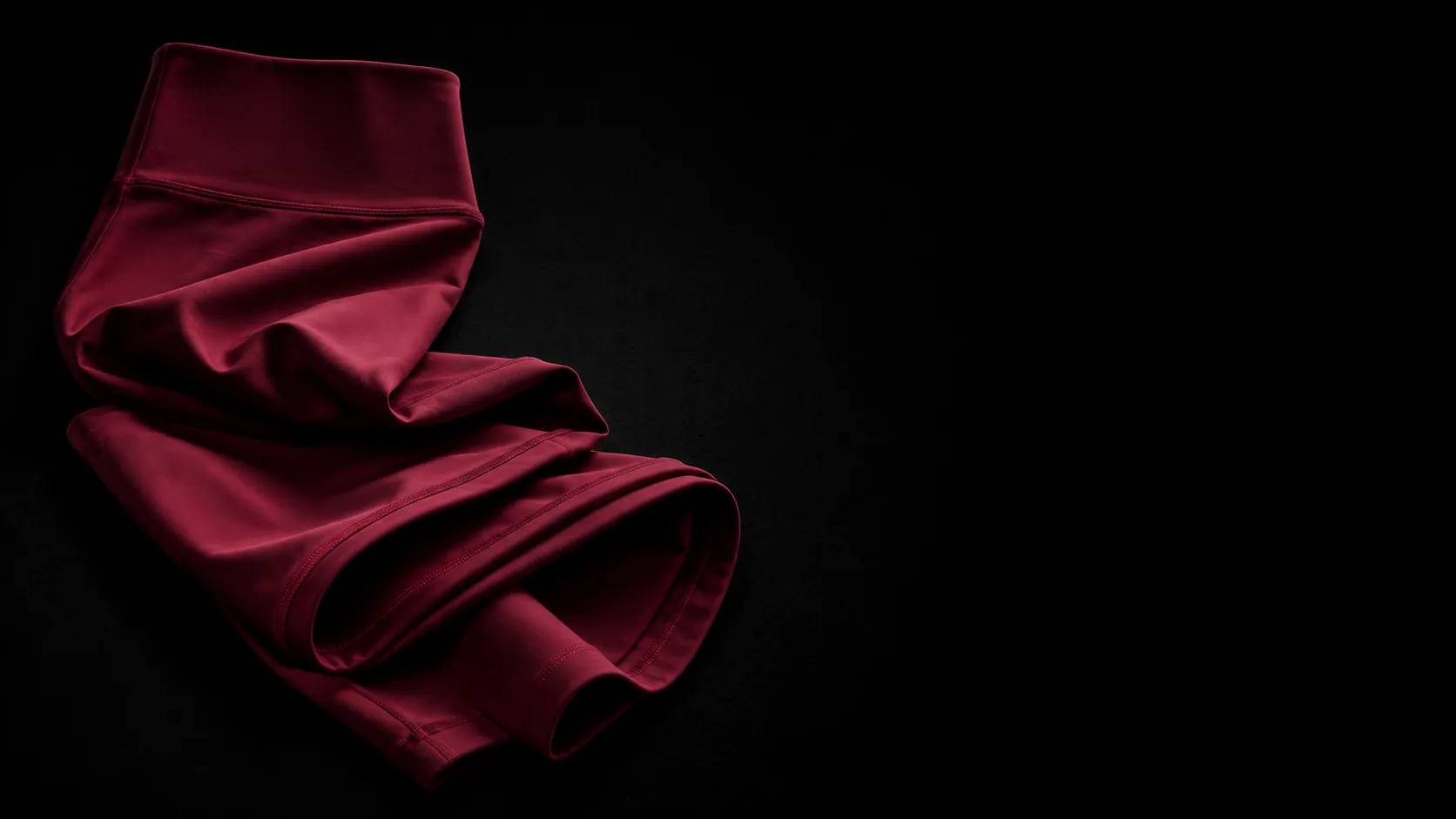
What “that feel” actually is
When people describe the leggings from the big performance brands, the words repeat: buttery, sculpting, weightless, second-skin, “naked.” Those are not marketing accidents — they map to measurable fabric properties. The famous hands (Lululemon’s Nulu and Align feel, Alo’s Airbrush, Vuori’s soft performance jersey, Gymshark’s seamless ranges) share a family of characteristics: a fine-denier nylon face for softness, a high spandex share for stretch-and-recovery, a mid-heavy weight for opacity and “hold,” and a matte or peached finish that kills shine. Reverse-engineer those properties into a spec and you can brief any capable factory to hit the same target — without copying a single design.
The fabric spec behind the buttery hand
Here is the target most premium leggings live inside. Give this to a factory and you are speaking their language:
| Property | Premium target | Why |
|---|---|---|
| Blend | ~75–80% nylon / 20–25% spandex on cut-and-sew; ~90/10 on seamless | Nylon = soft cool hand; high spandex = recovery & “hold” |
| Weight | 230–320 GSM | Opacity, squat-proof coverage, the “dense” premium feel |
| Yarn | Fine-denier nylon face | The buttery, brushed softness against skin |
| Finish | Matte / peached / brushed | Kills shine (shine reads as “cheap”), adds hand |
| Construction | Seamless circular knit or bonded | Second-skin fit, no chafe seams |
Two nuances separate “close” from “that feel.” First, weight is doing more work than people think — a 190 GSM fabric can feel nice in the hand but go sheer under a squat; the premium brands sit heavier for a reason. Second, the finish is half the magic — the same knit with a shiny finish versus a peached matte finish feels like two different price points. Our GSM and fabric guide walks the weight decision, and how to make squat-proof leggings covers the opacity side.
Fit is the other half — and it’s engineered, not copied
Fabric gets you the hand; fit gets you the sculpting. The brands people admire invest heavily in a fit block: a high, wide waistband that doesn’t roll or dig; a centre-back seam or gusset that shapes without a camel-toe; graded compression that holds the seat and thigh while staying breathable at the calf. You cannot copy a competitor’s pattern (and shouldn’t — it’s their IP), but you can brief the outcomes: “high-rise 28 cm waistband, no roll at deep squat, V-back seat shaping, medium compression through seat and thigh.” A factory with a proven activewear fit block turns that brief into a sample. The compression side is covered in compression manufacturing.
The factory tier is the quiet differentiator
Here is the part most guides skip. The big brands don’t feel premium only because of a spec sheet — they feel premium because they run at a factory tier that holds the spec consistently, lot after lot. The buttery feel is easy to hit once; hitting it identically across 5,000 pieces and three reorders is a manufacturing capability. That capability lives in vertically integrated factories that knit, dye and finish seamless under one roof, so the hand-feel doesn’t drift when a fabric broker swaps a yarn. A new brand’s real unlock isn’t finding a secret fabric — it’s producing at the same tier of factory the established brands use. How to tell that tier apart from a middleman is in factory vs trading company.
What a new brand can realistically match — and what takes scale
Being honest about the gap builds trust with your own customers:
- Matchable now: the fabric hand, the weight, the finish, the fit quality, the certifications. A capable seamless factory can put a genuinely premium legging in your hands at your first order — the physical product can absolutely compete.
- Takes scale: bespoke, mill-exclusive yarns developed over years; the very lowest per-unit cost (which comes from volume); and — the big one — brand equity, community and content. That last part is your job, not the factory’s.
In other words: the fabric and fit are a solved problem you can buy into at launch. The moat you actually build is brand. Assortment and launch strategy are covered in how to start an activewear brand.
How this maps to a Yesseam quote
When a founder tells us “I want it to feel like the premium brands,” we translate it into the spec above: a buttery nylon-spandex knit — 90/10 on seamless, 75/25 on cut-and-sew, customisable down to the yarn — at 230–320 GSM, matte peached finish, high-rise squat-proof block, OEKO-TEX® Standard 100 fabric. You approve the fit sample against that target, and reorders come off the same in-house knit programme so the feel doesn’t drift. That’s the whole point of producing at a real seamless factory rather than chasing a mystery “dupe” fabric: you own a repeatable spec, not a lucky sample. Fabric and per-unit reality is in the 2026 wholesale price benchmark.
What the big brands' fabrics are actually made of
Most questions about big-brand activewear come down to what is actually in the fabric. This is what each brand lists on its own product pages, checked on 22 September 2026. Blends change between seasons and sometimes between colourways of one style, so the care label on the garment in your hand is the final word.
| Brand | Product | Fabric | Composition, as listed by the brand |
|---|---|---|---|
| Lululemon | Align™ High-Rise Pant 25" | Nulu™ | 81% nylon, 19% Lycra® elastane |
| Lululemon | Wunder Train High-Rise Tight 25" | Everlux™ | 77% nylon, 23% Lycra® elastane |
| Lululemon | Wunder Under SmoothCover High-Rise Tight 25" | SmoothCover™ | 74% nylon, 26% Lycra® elastane |
| Lululemon | Define Jacket | Luon™ | 87% nylon, 13% Lycra® elastane |
| Lululemon | Swiftly Tech Short-Sleeve Shirt 2.0 | — | 50% nylon, 44% recycled polyester, 3% elastane, 3% X-Static® nylon |
| Lululemon | Hotty Hot High-Rise Lined Short 4" | — | Body 86% recycled polyester, 14% elastane; liner 89% polyester, 11% Lycra® elastane (varies by colourway) |
| Lululemon | InvisiWear Mid-Rise Bikini Underwear | — | 71% nylon, 29% Lycra® elastane; cotton gusset |
| Gymshark | Vital Seamless 2.0 Leggings | Seamless knit | 93% nylon, 7% elastane |
| Gymshark | Onyx 5.0 Seamless T-Shirt | Seamless knit | 73% nylon, 21% recycled polyester, 6% elastane; 374 gsm (style no longer listed) |
| Gymshark | Arrival 7" Shorts | — | 100% polyester |
| SKIMS | Fits Everybody T-Shirt Bodysuit and Thong | Fits Everybody | 76% polyamide, 24% elastane; 100% cotton gusset |
| SKIMS | Seamless Sculpt Brief Bodysuit | Seamless Sculpt | 82% nylon, 18% elastane; 100% cotton gusset |
| SKIMS | Soft Lounge Sleep Set | Soft Lounge | 91% modal, 9% elastane |
| SKIMS | Cotton Jersey T-Shirt | Cotton Jersey | 90% cotton, 10% elastane |
| SKIMS | Men's Cotton 5" Boxer Brief | Cotton | 43% cotton, 43% modal, 14% elastane |
| SKIMS | Men's Stretch 3" Boxer Brief | Stretch | 91% modal, 9% elastane |
| Vuori | Women's Performance Jogger | DreamKnit™ | 89% recycled polyester, 11% elastane |
| Vuori | Men's Sunday Performance Jogger | — | 88% recycled polyester, 12% elastane |
| Vuori | AllTheFeels™ Legging | BlissBlend™ | 75% recycled polyamide, 25% elastane |
| Vuori | Strato Tech Tee | — | 96% polyester, 4% elastane |
| Athleta | Salutation Stash High Rise Legging | Powervita | 75% nylon, 25% LYCRA® elastane |
| Beyond Yoga | Spacedye Caught in the Midi High Waisted Legging | Spacedye | 87% polyester, 13% elastane |
| SET Active | Sculptflex® Power Leggings | Sculptflex® | 88% microfiber nylon, 12% spandex |
| SET Active | Luxform® styles | Luxform® | 75% nylon, 25% Lycra |
| SET Active | Sportbody® styles | Sportbody® | 76% nylon, 24% spandex |
| SET Active | Formcloud® styles | Formcloud® | 78% polyester, 22% spandex |
Three patterns stand out. The leggings sold on softness — Align, Wunder Under, AllTheFeels, Salutation — are nylon with 19–26% elastane, while the seamless styles listed (Vital Seamless, Sculptflex) carry 7–12%. Pieces built for sweat — shorts, tees and joggers — lean on polyester, which dries fastest. And the brands sell fabric names rather than blends: Nulu, DreamKnit or Sculptflex describe a knit, a finish and a feel, but the composition beside each name is what you can actually compare. Turning those numbers into a spec for a factory is covered in our GSM and fabric guide.
Where Lululemon is made. Lululemon makes its products through about 51 manufacturing vendors. Its annual report for fiscal 2025 states that 40% of its products were made in Vietnam, 18% in Cambodia, 11% in Sri Lanka, 11% in Indonesia and 7% in Bangladesh, and that 34% of its fabrics originated from Taiwan, 29% from China Mainland, 10% from South Korea and 10% from Vietnam (Form 10-K, fiscal 2025).
FAQ
How do I make leggings that feel like Lululemon?
Specify the properties, not the brand: a fine-denier nylon/spandex knit around 75/25 blend at 230–320 GSM, with a matte or peached finish, produced on a seamless or bonded construction, on a high-rise squat-proof fit block. A capable seamless factory can hit that target at your first order. You are matching measurable fabric and fit properties under fair use, not copying any brand’s design or pattern.
Can a new brand really get the same fabric quality as the big brands?
Yes for the physical product — the hand-feel, weight, finish, fit quality and certifications are all matchable at a good seamless factory from your first order. What takes scale is bespoke mill-exclusive yarns, rock-bottom per-unit cost and, above all, brand equity and community, which is the part you build yourself.
What GSM and blend do premium leggings use?
Most premium leggings sit around 230–320 GSM with a matte finish; cut-and-sew styles use a roughly 75/25 to 80/20 nylon/spandex blend, while seamless styles run nearer 90/10. The higher weight gives opacity and the dense “hold” feel; the spandex gives stretch-and-recovery; the matte finish removes the shine that reads as cheap.
Is it legal to make activewear inspired by a big brand?
You can freely match generic properties — fabric weight, blend, fit outcomes, a color trend — because those aren’t protected. What you cannot do is copy a brand’s registered trademarks, logos, protected prints or exact patterns. Brief your factory on outcomes (“buttery high-rise squat-proof legging”), not on cloning a specific product, and you stay on the right side of the line.
What fabric are Lululemon leggings made of?
It depends on the line. On Lululemon's own product pages, the Align pant is Nulu fabric at 81% nylon and 19% Lycra elastane, the Wunder Train tight is Everlux at 77% nylon and 23% Lycra, and the Wunder Under SmoothCover tight is 74% nylon and 26% Lycra (checked 22 September 2026). All three are nylon-elastane knits; what separates them is the knit, the finish and the compression.
What is Gymshark made of?
Its training pieces are mostly nylon or polyester with elastane. On Gymshark's own pages the Vital Seamless 2.0 leggings are 93% nylon and 7% elastane, the Arrival 7-inch shorts are 100% polyester, and the Onyx 5.0 Seamless T-shirt was listed at 73% nylon, 21% recycled polyester and 6% elastane before it was withdrawn.
What material is SKIMS made of?
SKIMS' Fits Everybody bodysuits and underwear are 76% polyamide and 24% elastane with a 100% cotton gusset; its Seamless Sculpt shapewear is 82% nylon and 18% elastane; its Soft Lounge pajamas are 91% modal and 9% elastane; and its Cotton Jersey T-shirt is 90% cotton and 10% elastane. Men's boxer briefs come in a cotton-modal-elastane blend (43/43/14) or a modal-elastane stretch (91/9).
What is Vuori made of, and what is its softest fabric?
Vuori calls DreamKnit its softest premium stretch fabric; its women's Performance Jogger lists DreamKnit at 89% recycled polyester and 11% elastane. The AllTheFeels legging uses BlissBlend at 75% recycled polyamide and 25% elastane, the Strato Tech Tee is 96% polyester and 4% elastane, and the men's Sunday Performance Jogger is 88% recycled polyester and 12% elastane.
What fabric do Athleta and Beyond Yoga use?
Athleta's Salutation leggings are made in its Powervita fabric, listed at 75% nylon and 25% LYCRA elastane. Beyond Yoga's Spacedye leggings are 87% polyester and 13% elastane — a polyester knit rather than cotton, so check the label if cotton is what you are after.
What is SET Active's fabric, and which one is closest to Align?
SET does not publish sales by fabric. Its product pages list Sculptflex (88% microfiber nylon, 12% spandex, used on its seamless ribbed styles), Luxform (75% nylon, 25% Lycra), Sportbody (76% nylon, 24% spandex), Formcloud (78% polyester, 22% spandex) and Aeraline (72% nylon, 28% spandex), and it calls Sportbody and Formcloud its signature fabrics. On composition alone, Luxform and Sportbody are the closest to Align's Nulu (81% nylon, 19% Lycra), but feel also depends on the yarn, knit and finish, so compare them in the hand.
What are Fabletics leggings made of?
Fabletics sells its leggings by fabric family — PureLuxe, which it describes as its softest, lightly brushed fabric, and Motion365, which it describes as high-compression and breathable — and lists the exact blend in each product's details and on the care label. Blends vary by style, including in its scrubs line, so check the product you are looking at.
Where is Lululemon made?
Mostly in South and Southeast Asia. Lululemon's annual report for fiscal 2025 states that 40% of its products were made in Vietnam, 18% in Cambodia, 11% in Sri Lanka, 11% in Indonesia and 7% in Bangladesh, by about 51 manufacturing vendors, and that most of its fabric came from Taiwan and China Mainland.