How Much Spandex Should Leggings Have?
Spandex (elastane / Lycra®) percentage is the single most-asked fabric spec question we get from new brands — and the answer has real numbers behind it.
Quick answer: Seamless leggings run lower, at around 10% spandex — our seamless standard is 90/10 — because the elastane is knitted in on every course; the figures that follow are for cut-and-sew fabric. For performance leggings the working range is 20–30% spandex; across our 2,935-style catalog the median is 25% (re-confirmed at 24% in the Q3-2026 refresh — the same picture), and the most common composition is 75% nylon / 25% spandex. Below ~15% leggings lose recovery and bag at the knees; above ~30% you add cost and heat with little benefit. Compression styles sit at the top of the range, casual athleisure at the bottom.
What spandex actually does
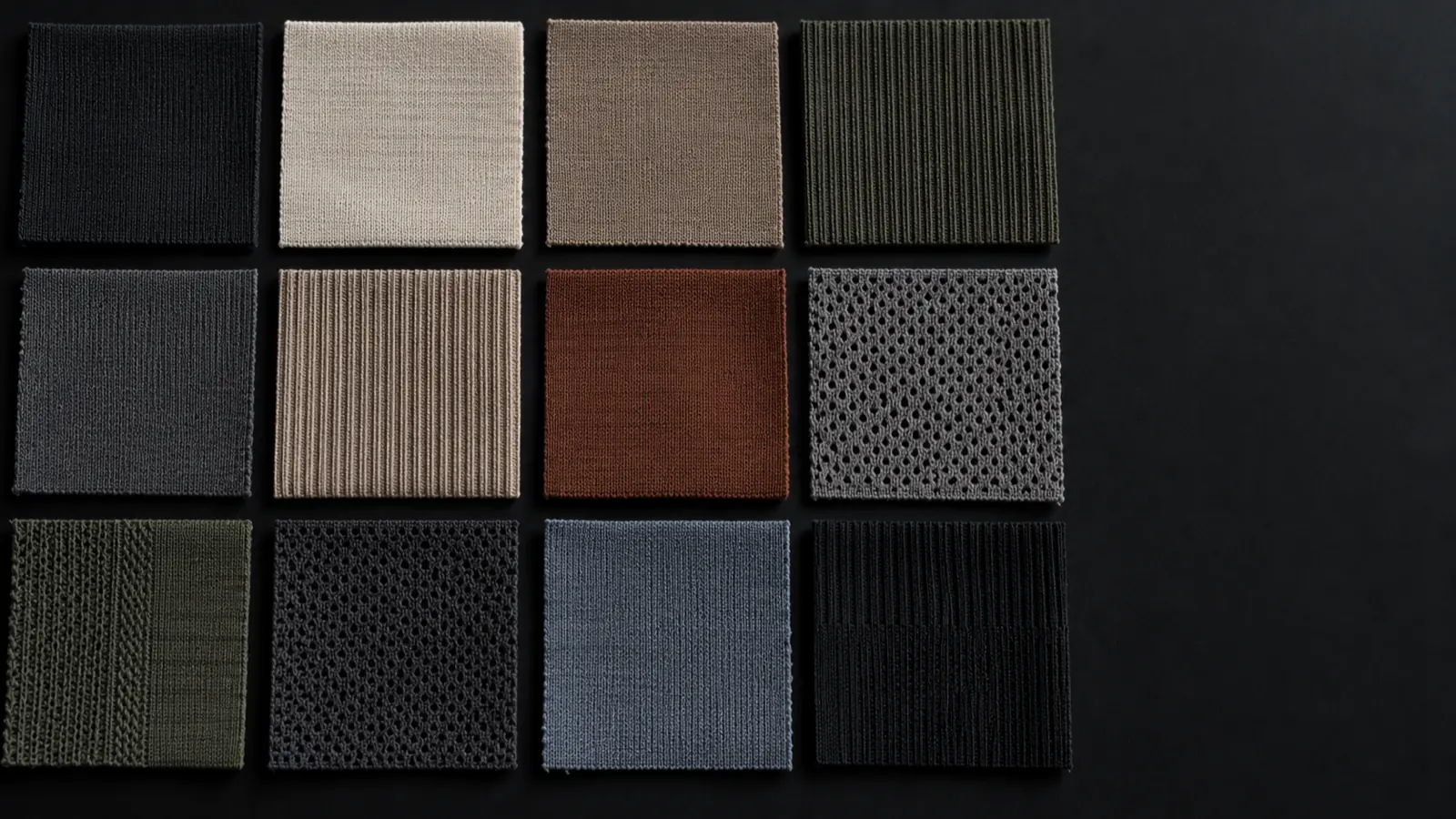
Spandex contributes almost nothing to how a fabric feels on the shelf — that is the nylon or polyester. What it controls is stretch and, more importantly, recovery: how hard the fabric pulls back to shape. Recovery is what keeps a waistband up through a workout, stops knees from bagging, and makes a legging feel “held” rather than loose.
The ranges that work, by product
| Product | Spandex range | Why |
|---|---|---|
| Performance / squat-proof leggings | 22–28% | High recovery under repeated stretch |
| Compression styles | 25–30% | Sustained holding power |
| Yoga / buttery-soft sets | 20–25% | Softness with enough snap-back |
| Sports bras & bralettes | 20–25% | Band recovery without dig-in |
| Casual athleisure / lounge | 15–20% | Comfort-first, lower cost |
| Swim (chlorine exposure) | 18–22% | Use chlorine-resistant elastane |
Those bands line up with what the market actually produces: in our catalog, 88% of styles are nylon/spandex blends and the centre of gravity is 75/25. Full pricing context by category is in our wholesale price benchmark.
Seamless is the exception. On a circular seamless machine the elastane is knitted in with the nylon on every course of the tube, and the knit structure does much of the holding, so seamless leggings, bras and sets typically run about 10% spandex. Our seamless standard is 90% nylon / 10% spandex, and big-brand seamless lines sit in the same place — Gymshark lists its Vital Seamless leggings at 93/7 and SET its Sculptflex fabric at 88/12 (see what the big brands' fabrics are made of). The ranges in the table apply to cut-and-sew fabric, where our standard is 75% nylon / 25% spandex. Both blends, and the yarn itself, can be customised.
Why more spandex isn’t better
Three reasons to resist the “more stretch = premium” instinct. Cost: elastane is the most expensive common fibre in the blend, and every extra point shows up in FOB. Comfort: high-elastane fabrics run warmer and can feel rubbery past ~30%. Durability: elastane is the first fibre to die — heat, chlorine and dryers fatigue it — so a very high percentage just means more of the fragile component. Fabric quality problems that get blamed on “cheap spandex” are usually recovery-spec problems instead.
Stretch vs recovery: what to put in the tech pack
Composition alone does not guarantee behaviour — knit structure and yarn quality matter as much. Spec the outcome, not just the blend: ask for stretch percentage (e.g. ≥120% width-wise) and growth/recovery (e.g. ≤8% growth after repeated extension) on the fabric test report. A 75/25 with a good warp-knit or double-knit structure will beat an 80/20 with a loose structure every time. Pair this with the right base fibre — see nylon vs polyester.
How Yesseam specs it
Our seamless standard is 90% nylon / 10% spandex for leggings, bras and sets, and our cut-and-sew fabrics are typically 75% nylon / 25% spandex, with stretch-and-recovery numbers on every fabric card. Both the blend and the yarn can be customised — a compression program, for example, can take a higher elastane share. If you bring a target hand-feel, we map it to a composition and show you the trade-offs on real catalog styles before you commit.
Spec the outcome faster with our free Seamless Fabric Spec Builder — it turns these ranges into a paste-ready tech-pack clause.
FAQ
Is 8–12% spandex enough for leggings?
It depends on how they are made. For seamless leggings, yes: around 10% is the norm, because the elastane is knitted in on every course — our seamless standard is 90/10. For cut-and-sew fabric sold as performance leggings, no — recovery will be weak, knees will bag and waistbands will slide, so 20% is a sensible floor there.
Is Lycra® different from generic spandex?
Chemically they are all elastane. Branded fibres like Lycra® or Creora® buy you tighter batch-to-batch consistency and specialised variants (chlorine-resistant, heat-set friendly). On a premium line the consistency is worth it; on stock programs a quality generic performs well.
Does spandex percentage decide whether leggings are squat-proof?
Only partly. Opacity under stretch is mostly fabric density (GSM), knit structure and colour. A 220+ GSM 75/25 double knit is squat-proof; a 160 GSM 80/20 single knit is not, despite more spandex.
What percentage should sports bras use?
For cut-and-sew bras, 20–25% in the body; seamless bras typically run about 10%. Either way the band’s holding power comes from structure (knit-in channels, folded bands) rather than raw elastane percentage. Very high spandex in a bra reads as tight but fatigues quickly.
Developing this product?
Yesseam is a vertically integrated seamless activewear factory in Xiamen — in-house knitting, dyeing partners, sewing and QC, with stock programs from 50 pcs plain or 100 pcs with your logo, and custom development from 500 pcs. Send your idea or tech pack and we will come back with options and honest numbers within 24 hours.
Get a quote