Quick answer: Seamless garments are knitted on circular machines as a continuous tube of yarn, so there are almost no cut-and-sewn side seams. Knit zones — compression, mesh, ribbing — are programmed right into the fabric instead of stitched on later. The result is a second-skin fit with minimal chafe.
What "seamless" actually means
A lot of people assume "seamless" is a coating, a fabric, or some kind of bonded finish. It isn't. Seamless is a construction method — the garment is knitted in one continuous piece rather than cut from flat fabric and sewn together. In traditional cut-and-sew, you knit a flat roll of fabric, cut out pattern pieces, then stitch them at the sides, waist and seat. Every one of those joins is a seam that can dig in, rub or fail. Seamless skips almost all of that: the body of the legging or bra comes off the machine already shaped, as a tube, with the "panels" knitted directly into a single skin.
The circular knitting machine
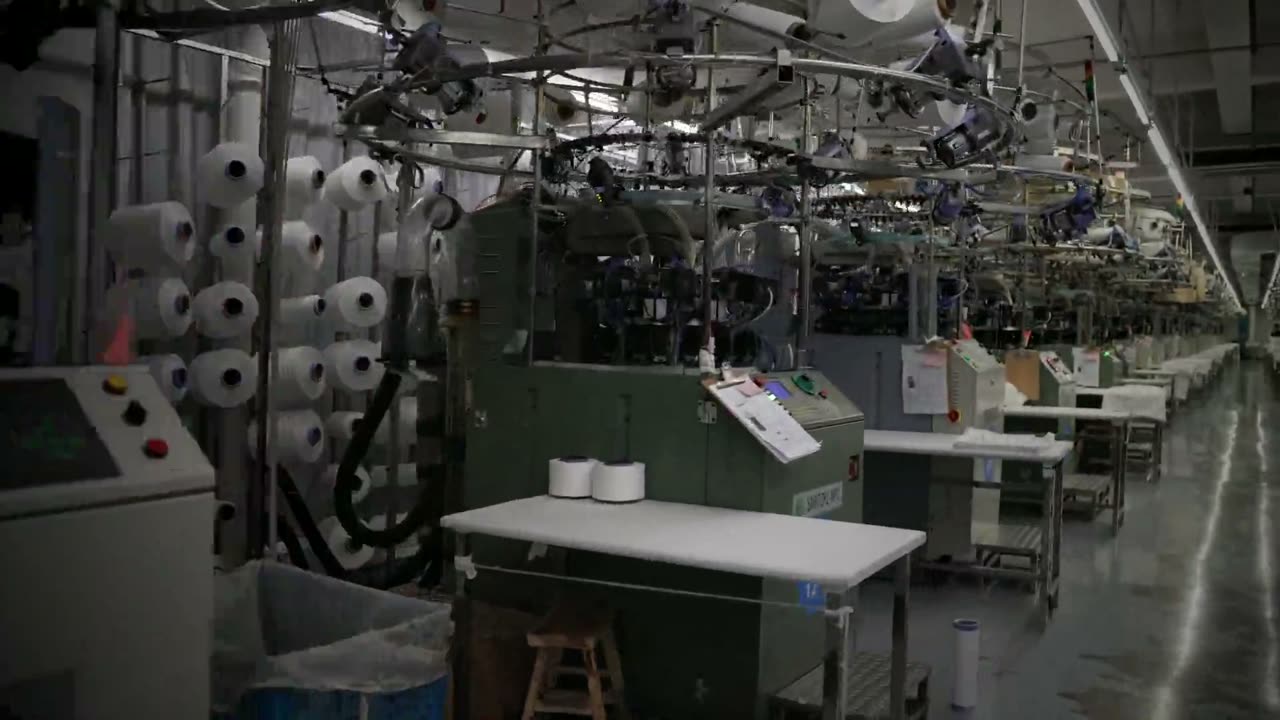
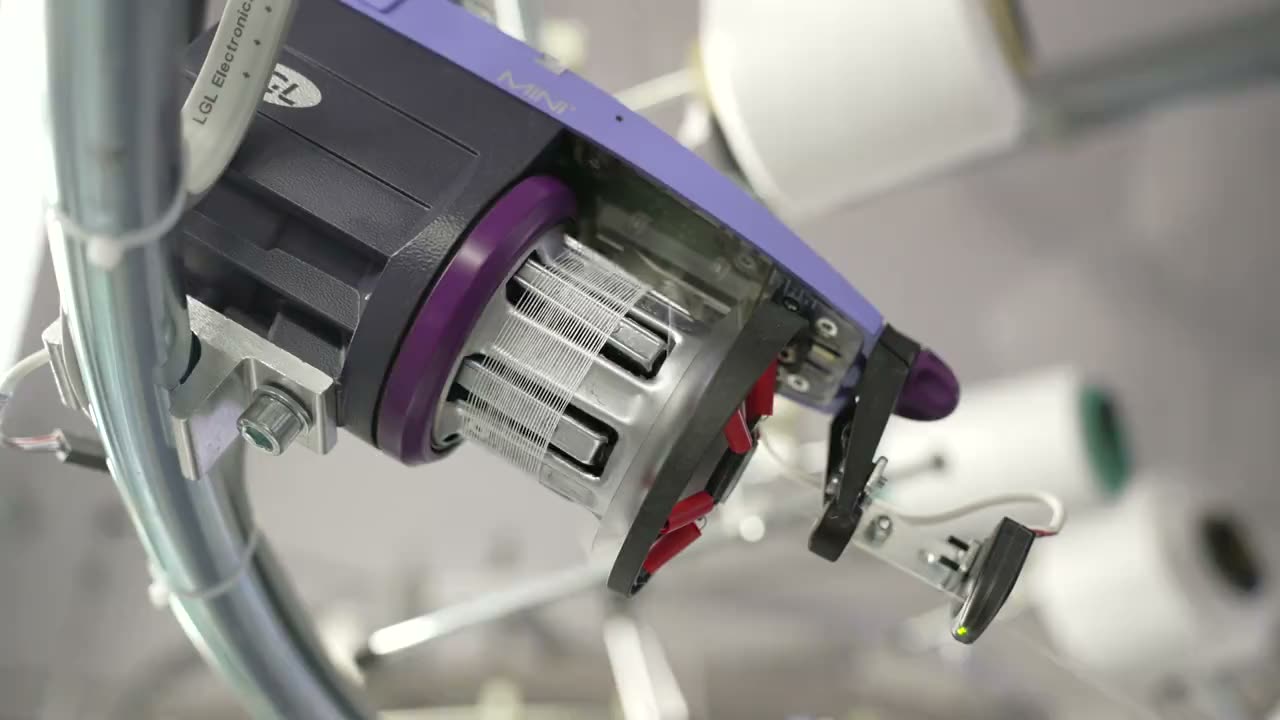
The heart of a seamless factory is the small-diameter circular knitting machine. Picture a vertical cylinder ringed with hundreds of fine latch needles — anywhere from roughly 200 to 400+ depending on the gauge. The needles fire in sequence around the circle, looping yarn into a continuous tube. Because it's computer-controlled, the same machine can change the stitch on the fly: a dense, high-tension knit for a supportive waistband; an open, airy knit for a mesh ventilation panel; a ribbed structure for grip and shape. So a single tube comes off the machine with different zones — support here, breathability there — all in one piece, no sewing between them. That body-mapping is the whole magic of seamless.
From yarn to garment: step by step
Here's the actual flow we run in-house, start to finish:
- 1. Yarn selection. We pick the nylon/spandex blend for the job — typically 90% nylon to 10% spandex, customisable down to the yarn, in the GSM that suits the style. (More on weight in our GSM guide.)
- 2. Knitting the tube. The yarn is loaded onto the circular machine, which knits the body as one continuous tube, switching stitch patterns to build the compression, mesh and ribbed zones in the right places.
- 3. Linking & closing. The few points that can't be tube-knitted — the gusset, the crotch on leggings, the toe on socks — are linked or closed by hand on a linking machine, so even those joins stay low-profile.
- 4. Dyeing. The greige (undyed) pieces are dyed to your Pantone, then checked for colour consistency across the batch.
- 5. Finishing & heat-setting. Each piece is heat-set on a form so it holds its true shape and size, then steamed and pressed.
- 6. Logo & QC. Heat-transfer or woven logos go on, and every piece is inspected for gauge, tension, colour and shape before it's packed.
Why seamless feels different
Once you understand the construction, the feel makes sense. There are no bulky side seams to press into your hip when you bend, so there are far fewer chafe points on a run or in a deep stretch. The continuous knit holds its stretch and bounces back better over time — good recovery means the leggings don't bag out at the knee. It sits smooth and invisible under clothing, with no seam lines telegraphing through. And because the support, ventilation and grip are body-mapped into the knit, the garment can be firm where you want hold and breathable where you sweat — without a single extra panel sewn on.
What seamless can and can't do
Seamless is brilliant for what it's built for: leggings, bras, bodysuits, tanks, shorts, tubes and matching sets — anything that wants a smooth, stretchy, second-skin shape. Where it hits a wall is hard structure. You can't tube-knit a real pocket, a zip, a structured underwire channel or a sharp contrast panel — those need fabric to be cut and sewn. That's exactly where cut-and-sew takes over, and why most serious brands use both. We knit seamless in-house at our Xiamen factory and run cut-and-sew under the same roof, so you can mix a seamless hero set with cut-and-sew performance styles without juggling two suppliers — both from a 50-piece MOQ.
Machine class, gauge and what each one is used for
“Seamless” is not one machine. The cylinder’s diameter decides what circumference of garment it can build, and its gauge — needles per inch — decides how fine the resulting fabric is. Those two numbers, chosen before a single stitch is knitted, set the ceiling on what your garment can feel like.
| Machine class | What it builds | Gauge character | Typical categories | Practical limit |
|---|---|---|---|---|
| Small-diameter body cylinder | Close-fitting tubes for the torso and hips | Finer gauges favoured for next-to-skin smoothness | Bralettes, sports bras, camis, seamless underwear | Size range per cylinder is narrow — wide ranges need a second set-up |
| Large-diameter body cylinder | Longer, wider tubes with zoned shaping | Mid to fine gauges; supports zoned compression | Leggings, bike shorts, bodysuits, two-piece sets | Leg opening is limited — a true bell flare needs cut panels |
| Coarser-gauge set-up | Structure-forward fabrics where the knit is the design | Fewer, heavier needles; texture reads from a distance | Ribbed sets, statement textures, chunkier one-size pieces | Lower opacity at a given weight — needs more GSM to pass the squat test |
| Cut-and-sew line (paired) | Panels, moulded cups, flares, zips | Not applicable — fabric arrives finished | Hybrid styles, structured bras, outerwear | Introduces the seams seamless exists to avoid — used deliberately, not by default |
Two consequences worth planning around. First, gauge is a machine property, not an order option: it cannot be changed on a style already scheduled on another cylinder. Second, your size range is a machine decision before it is a pattern decision — which is why adding XXL late can change a quote. The full detail sits in the machine gauge guide and the capability boundary map.
FAQ
What is seamless activewear?
Clothing knitted on circular machines as a continuous tube of yarn, so there are almost no cut-and-sewn side seams. Support, mesh and ribbed zones are programmed straight into the fabric, giving a smooth, second-skin fit with minimal chafe.
How are seamless leggings made?
They start as nylon/spandex yarn knitted into a continuous tube on a small-diameter circular machine. The machine varies the stitch to build the waistband, mesh and ribbed zones in one piece; then the gusset is linked closed, and the pieces are dyed, heat-set and finished with your logo before QC.
Is seamless better than regular leggings?
For a smooth fit with fewer chafe points and clean lines under clothing, yes — that's the seamless sweet spot. For pockets, zips and contrast panels, cut-and-sew wins. Neither is strictly "better"; it depends on the style. We knit both in-house from a 50-piece MOQ.
How does seamless clothing work?
A computer-controlled circular machine knits the garment as one continuous tube, changing the stitch as it goes — firmer knit for a waistband, open knit for ventilation, rib for grip — so the zones that a sewn garment would build from separate panels come off the machine already joined. The few points a tube cannot close, such as the crotch of a legging, are linked, and the piece is then dyed, heat-set on a form and inspected.
How are seamless tops and shirts made?
The body is knitted as a tube sized to the torso, with the neckline and armholes finished after knitting. Where a top has sleeves, the sleeves are knitted as separate tubes and linked at the shoulder, which is why a seamless long-sleeve top usually still has a join there while its sides stay seam-free.
How is seamless underwear made?
The same way on a smaller scale: a tube is knitted with the waistband built in, the leg openings are shaped in the knit, and the crotch is closed with a low-profile join — often with a gusset added for comfort. The result has no side seams to show under tight clothing, which is the whole point of the category. More detail is in seamless underwear explained.
How is a seamless bodysuit made?
As a longer tube running from the neckline to the crotch, knitted with the bust, waist and hip zones programmed in, then closed at the crotch with a linked join or a gusset. The length and the number of density changes along it make bodysuits one of the more demanding seamless programs to fit across sizes.