How Moisture-Wicking Fabrics Actually Work
“Moisture-wicking” is on every activewear label, yet most product pages can't explain it. Here's the physics in plain language, the difference between wicking and drying, and what to actually write in your tech pack.
Quick answer: Moisture-wicking isn't a magic fiber — it's capillary action. Fine channels between yarns pull sweat off your skin and spread it across the fabric face so it evaporates faster. Fiber choice, knit structure and finish together decide how well — and how long — it works.
Wicking and drying are two different jobs
Wicking moves liquid sweat away from skin into the fabric. Drying is how fast that moisture then leaves the fabric. A knit can wick brilliantly and still feel wet if it holds moisture (cotton's problem), or dry fast but let sweat bead on your skin. Good performance fabric does both: pull, spread, evaporate.
Where the “channels” come from
- Fiber: synthetic fibers (polyester, nylon) absorb little water themselves, so moisture travels between fibers, not into them. See our nylon vs polyester comparison.
- Yarn & knit: finer yarns and denser interlock structures create more capillary channels; mesh zones increase airflow where you sweat most.
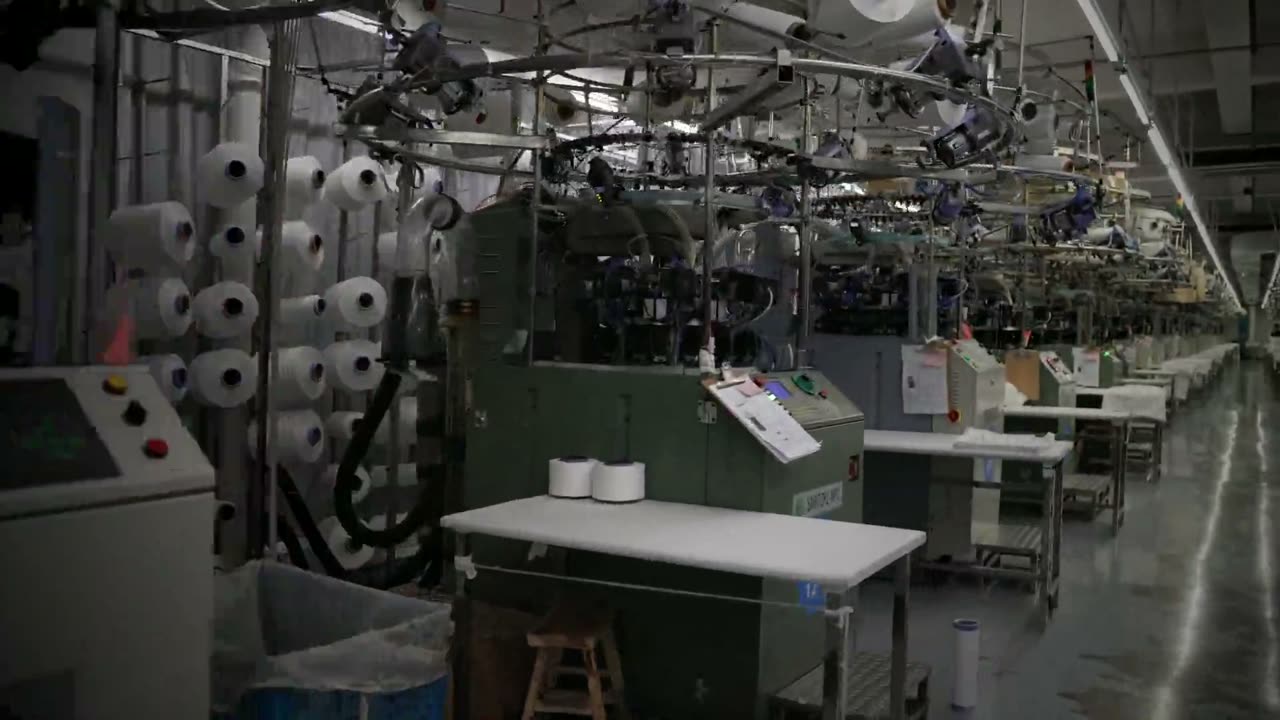
- Zoning: on circular seamless machines we knit ventilation mesh directly into back panels, underarms and behind knees — no sewn-in inserts needed.
The finish trap: treatments that wash out
Some budget fabrics get their wicking from a hydrophilic chemical finish. It works out of the bag — then fades over repeated washes. Structural wicking (fiber + knit) lasts the life of the garment. Ask your factory which one you're buying; if the spec sheet says “wicking finish”, ask how many washes it's rated for.
How to spec and test it
- Write the blend and GSM, not just “moisture-wicking” — see the GSM guide.
- Drop test: a water drop should flatten and spread within seconds, not bead.
- Vertical strip test: dip a fabric strip 5 mm into water; good knits climb visibly within minutes.
- Wear trial after 5 washes — the only test that catches wash-out finishes.
Tell us where your customer sweats and we'll knit the zoning to match — and ship you a free swatch pack in 48 hours so you can run the drop test yourself.
How to verify a wicking claim in five minutes
Wicking is testable at your desk. The drop test: lay the fabric flat, place a single water drop on the inner face, and time it — a true wicking knit pulls the drop flat into the fiber within seconds, spreading a wide pale ring; a slow bead means a finish is doing the marketing. The vertical strip test: hang a 2 cm strip with its tip in water and measure the climb after 10 minutes — higher is better capillary action. Then dry time: wet a patch, hang it, and check at 30-minute marks. Run the same tests after five washes, because cheap topical wicking finishes wash out while capillary structures knitted into the yarn do not.
Fiber and knit choices that actually wick
Wicking is architecture, not magic. Synthetic fibers absorb almost nothing themselves; performance comes from moving sweat along fiber surfaces and through capillary channels. Cross-section shaped yarns move moisture faster than round ones; finer filaments create more capillary surface; and knit structure finishes the job — mesh zones and rib channels give vapor somewhere to go. Cotton remains the anti-pattern for training wear (absorbs, sags, stays wet), which is why 88% of our catalog runs nylon- or polyester-based knits. For hot-climate lines, pair a wicking inner face with ventilation zones knitted exactly where heat maps say sweat concentrates: center back, under-bust, behind the knee.
Writing claims that survive scrutiny
"Moisture-wicking" is a performance claim, and the brands that get burned are the ones that print it on fabric that merely feels dry in the store. Safe practice: claim what you tested ("pulls sweat to the surface and dries fast — tested after 5 washes"), keep your test notes with the fabric spec, and never bolt "antibacterial" or "cooling" onto a product page unless the yarn actually carries that treatment with documentation. Specific, testable language converts as well as buzzwords and survives both customer reviews and the tightening claim rules in the EU — same principle as the recycled-content claims guide.
The sports-jersey case: when wicking is not the property you are short of
Wicking gets asked for by name far more often than it is the actual constraint. The clearest example is a team jersey. A loose polyester jersey worn over bare skin in a warm hall is rarely failing to move sweat — polyester is hydrophobic and moves liquid along fibre surfaces almost regardless of how it is knitted. What it fails at is getting that moisture out of the garment and into the air, and that is a different property with a different unit and a different test.
Two numbers describe it. Water-vapour resistance (Ret) is how much the fabric obstructs evaporation, measured on a sweating guarded hotplate; lower is more breathable. Drying rate is how fast a wetted specimen returns to dry. A fabric can be excellent at the first and mediocre at the second, and a wearer experiences the combination, not either alone.
| Garment scenario | What the wearer actually complains about | The property to specify | Published method |
|---|---|---|---|
| Loose team jersey, indoor court | “It never dries, it just gets heavier” | Low water-vapour resistance and a fast drying rate — not more wicking | ISO 11092 (Ret) and ISO 17617 (drying rate) |
| Compression base layer under a kit | “Clammy against the skin” | Wicking away from skin into the outer layer; the outer layer then carries evaporation | ISO 11092 on the layered system, not on the base layer alone |
| Outdoor jersey in wind | “Freezing the moment I stop” | Deliberately higher resistance in wind-exposed panels — the opposite specification | ISO 11092, read alongside air permeability (ASTM D737) |
| Seamless training top, gym | “Wet patches show through” | Spreading area and shade choice, which is an appearance problem, not a physiology one | No published method — test on the actual colourway |
The practical consequence for a brief: asking a mill for “maximum wicking” on a loose jersey optimises a property the garment already has enough of, while leaving the one the wearer notices unmeasured. Ask instead for an Ret figure and a drying-rate figure, both on the finished fabric in the actual weight. A mill that runs these tests will produce the numbers; a mill that does not will offer adjectives, which is itself a useful answer.
Finish or fibre: the difference that only shows up at wash thirty
Wicking reaches a fabric by one of two routes, and they behave identically on day one and nothing alike a season later. Fibre-intrinsic wicking is built into the yarn and the knit: shaped filament cross-sections, high filament counts, capillary channels between them, and a structure that gives the liquid somewhere to spread. Nothing can wash out because nothing was applied. Finish-based wicking is a hydrophilic treatment applied to the fabric surface after knitting. It works, it is cheap, and it is consumed by laundering — which is why a garment can genuinely test well at the factory and disappoint its owner in month four.
| Fibre-intrinsic | Finish-based | |
|---|---|---|
| Where it lives | Filament shape, filament count, knit structure | A hydrophilic treatment on the fabric surface |
| Cost at the mill | Higher yarn cost, no extra process step | Low yarn cost, one extra finishing step |
| After 5 washes | Unchanged | Usually still performing |
| After 30 washes | Unchanged | Materially reduced, sometimes gone |
| How to tell them apart | Performance is identical before and after the wash cycles | Performance drops measurably across the same cycles |
| What to write in the spec | Yarn cross-section and filament count, plus the knit | The finish name and the number of wash cycles it is warranted for |
There is one clean way to settle it, and it needs no laboratory relationship: ask for the wicking result before and after a stated number of home wash cycles run to ISO 6330, which defines the domestic washing and drying procedures textiles are tested under. Intrinsic performance is flat across that comparison. A finish is not. Any supplier can run it, the cost is trivial next to a season of returns, and the request alone tends to produce a more honest conversation about which route a fabric is actually using.
Neither route is dishonest. A finish is a reasonable choice for a low-price programme with a short expected life, provided it is described as one. What is not reasonable is selling a finish as a fibre property — and the wash-cycle question is the difference between the two.
Which fabrics and garments actually wick
Most questions about wicking are really questions about a specific fibre or garment. The short version: fibres that repel water move sweat along their surface and wick well; fibres that absorb water hold sweat inside them and feel wet.
| Fibre | Wicks? | Why |
|---|---|---|
| Nylon (polyamide) | Yes | Absorbs little water; fine filaments create many capillary channels. The usual base of performance leggings. |
| Polyester | Yes | Absorbs even less water than nylon and dries fast; common in training tops and jerseys. |
| Nylon or polyester with spandex | Yes | The elastane adds stretch and recovery; the wicking comes from the nylon or polyester around it. |
| Polypropylene | Yes | Barely absorbs water at all; found in base layers. |
| Merino wool | Partly | Absorbs moisture into the fibre yet still feels dry against the skin; slower to dry than synthetics. |
| Viscose, modal, bamboo-derived fibres | Weakly | Soft and absorbent, so they take sweat in rather than moving it on; better for lounge than training. |
| Cotton | No | Absorbs sweat and holds it against the skin, which is why cotton feels heavy and cold when wet. |
Wicking, breathability, quick-drying and waterproofing are four separate properties, and labels blur them constantly:
| Property | What it does | What it does not do |
|---|---|---|
| Moisture-wicking | Moves sweat off the skin and spreads it across the fabric | Does not make the fabric dry, and does not keep rain out |
| Breathable | Lets air and water vapour pass through | Does not move liquid sweat on its own |
| Quick-dry | Releases the moisture it holds fast | Says nothing about how sweat leaves the skin |
| Waterproof | Stops liquid water getting through | Usually traps sweat unless the membrane is also breathable |
Wicking yarn is where the property starts. A yarn made of many fine nylon or polyester filaments has far more capillary paths than one made of a few thick ones, and filaments spun with grooved or multi-lobed cross-sections add more still. That is why two fabrics of the same fibre and weight can wick very differently: the filament count and shape inside the yarn decide it before any finish is applied.
By garment, the same rule applies. Compression shorts, sports bras, sports underwear, undershirts and headbands wick when they are made from nylon, polyester or polypropylene knits, and stop wicking as soon as cotton becomes the main fibre. Where a garment sits against a sweat zone — under the bust, at the waistband, across the back — the fibre matters more than the style.
Sources
| Standard | What it establishes here |
|---|---|
| ISO 11092:2026 — Textiles: measurement of thermal and water-vapour resistance under steady-state conditions (sweating guarded-hotplate test) | The published method behind Ret, the breathability figure the jersey scenario turns on |
| ISO 17617:2014 — Textiles: determination of moisture drying rate | The method for drying rate, applicable to all fabric forms (not loose fibre or yarn) |
| ISO 6330:2021 — Domestic washing and drying procedures for textile testing | The wash cycles that separate an intrinsic property from a finish |
| ASTM D737-18(2023) — Air Permeability of Textile Fabrics | The airflow figure read alongside Ret for wind-exposed panels |
FAQ
Is cotton bad for workouts?
Cotton absorbs sweat into the fiber and holds it, so it gets heavy and dries slowly. Fine for low-sweat wear; for training, synthetics or blends perform better.
Do wicking finishes last?
Chemical hydrophilic finishes typically weaken over repeated washing. Structural wicking from fiber and knit design lasts the garment's life.
Does seamless wick better than cut-and-sew?
Not automatically — but seamless machines can knit mesh ventilation exactly where sweat happens, without sewing in panels, which is hard to match in cut-and-sew.
What does wicking mean in fabric?
Wicking is a fabric's ability to draw liquid along and through its fibres by capillary action — the same effect that lets a candle wick pull up wax. In activewear it means pulling sweat away from the skin and spreading it across the outer face of the fabric, where it can evaporate. A wicking fabric does not absorb sweat into its fibres; it moves it.
What is moisture-wicking yarn?
Yarn engineered to move liquid along its surface rather than soak it up: usually nylon or polyester spun as many fine filaments, sometimes with grooved or multi-lobed cross-sections that create more channels between filaments. The finer and more numerous the filaments, the more capillary paths there are — which is why wicking is built into the yarn and knit, not only added as a finish.
Is moisture-wicking the same as Dri-FIT?
Dri-FIT is one brand's name for its moisture-wicking polyester fabrics. Moisture-wicking is the generic property, and many fabrics without a trademark do the same job. When comparing, look at the fibre, the knit and whether the wicking is intrinsic or a washable finish — not at the label.
Is moisture-wicking fabric waterproof?
No — they do opposite jobs. Waterproof fabric stops liquid passing through; moisture-wicking fabric is designed to let sweat travel through and out to the surface. A garment can be both breathable and wicking, but a wicking training top will soak through in the rain.
Does capillary action keep clothing dry?
It keeps your skin drier rather than the garment dry. Capillary action pulls sweat off the skin into the fabric's channels and spreads it thinly so it evaporates faster; the fabric carries the moisture for a while, but spread out instead of pooled against your body.
How is wicking tested?
The simplest method is a vertical strip test: dip the bottom few millimetres of a fabric strip in water and measure how far the water climbs in a set time. A drop test on the inner face is a quick check — a wicking knit pulls the drop flat within seconds. Test before and after repeated washing, since that is what separates built-in wicking from a finish; the five-minute versions are described above.
Is moisture-wicking good for hot weather?
Yes, when it comes with good breathability: wicking moves sweat to the surface, and an open, air-permeable fabric lets it evaporate. In hot, humid conditions evaporation slows, so a lighter and more open knit matters as much as the wicking itself.
How does moisture-wicking fabric work in athletic wear?
In three steps. It pulls liquid sweat off the skin by capillary action — polyester and nylon absorb almost no water, so sweat travels along the fibre surfaces and through the fine channels between filaments; it spreads that sweat thinly across the outer face of the fabric; and the spread-out moisture evaporates far faster than a pooled patch would. Finer filaments and shaped cross-sections create more channels, and mesh or open zones give the vapour a way out. Wicking and drying are separate properties, so a good training fabric is chosen for both.
What is moisture-wicking fabric?
A fabric — usually a knitted polyester or nylon with elastane — that moves sweat away from the skin to its outer surface instead of soaking it up, so the wearer stays drier and the fabric dries quickly. It is the opposite of cotton, which absorbs sweat and holds it. The effect is either built into the fibre, yarn and knit, or added as a chemical finish that can wash out, and it is not the same thing as waterproof.
What is a wicking finish?
A hydrophilic chemical treatment applied to the fabric surface after knitting, so that the fabric pulls moisture even though the wicking does not come from the yarn and knit themselves. It works well when new and costs little, but laundering gradually removes it. If a specification says “wicking finish”, ask how many wash cycles it is warranted for and ask for wicking results before and after home washes run to ISO 6330.
How does moisture-wicking technology work in a soccer jersey?
A soccer jersey is typically a lightweight polyester knit, often with a mesh or open structure. Polyester absorbs almost no water, so sweat moves along the fibres to the outside of the shirt, where moving air evaporates it. On a loose jersey the limit is rarely the wicking itself but how fast moisture leaves the garment — its water-vapour resistance, measured to ISO 11092, and its drying rate, measured to ISO 17617. Branded jersey “technologies” are names for a combination of fibre, knit and sometimes a finish.
Organic cotton or synthetic tank tops: which is better for sweat and comfort?
It depends on how much you sweat. “Organic” describes how the cotton was grown, not how it handles moisture: like any cotton, an organic cotton tank absorbs sweat and holds it, so it feels soft and breathable for everyday wear but heavy and clammy in hard training. A polyester or nylon tank absorbs very little, moves sweat to the surface and dries much faster. For lounging and light activity, choose cotton; for workouts, synthetics.